Why We Have to Dig
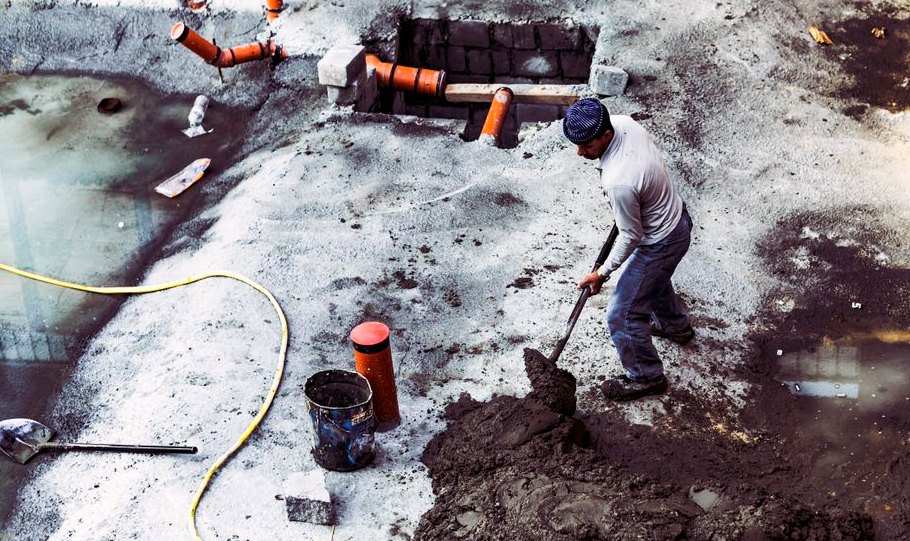
Interior fixes manage water after it's already inside the wall. Exterior work stops it before it gets there, which matters when the wall itself has a crack running through its full thickness. When we excavate, we expose the wall from grade down to the footer so we can see exactly what we're dealing with. Sometimes that's a hairline crack that's been quietly letting hydrostatic pressure through for years. You don't know the extent of the damage until the dirt is out of the way, and that's the value of doing it this way instead of guessing from inside.
Sealing the Wall Before Anything Goes Back
Once the wall is exposed, cracks get treated directly rather than covered over. For a crack running through the wall, we drill entry ports at intervals along its length and inject epoxy or polyurethane resin under low pressure, working port to port until material shows at the next one, then capping it off. That fills the void through the entire thickness of the wall, not just the surface. A surface patch on the outside does nothing if water is still finding its way through the middle of the concrete.
We also use hydraulic cement where it's needed, particularly on active seeps or areas where water is actively coming through while we're working. It sets fast, even with moisture present, so we can get a stable surface before the rest of the exterior system goes on. This keeps the wall itself from being the weak point after everything else is buried again.
Drainage Does the Rest of the Work
A sealed wall stops water from coming through the concrete, but it doesn't stop water from pooling against the foundation in the first place. That's where drainage comes in, and for a lot of Akron properties, that means tying the exterior work into a sump system. The process is straightforward but has to be done in the right order: we excavate a pit to the correct depth below the drain tile, set a perforated liner so groundwater can enter without mud and debris fouling the pump, seat the submersible pump, install a check valve on the discharge line so water doesn't just fall back into the pit, and route the discharge well away from the foundation so it's not just recirculating back down through the soil.
What Drives the Price
For the sump pump piece of a job like this, we typically see costs land between $490 and $2500. Where a specific project falls in that range comes down to a few things: how deep the pit needs to be relative to your existing drain tile, whether we're tying into an existing system or building the drainage fresh, how much excavation and backfill the site requires, and how far the discharge line has to run to get water safely away from the foundation.
Exterior crack injection and wall sealing add their own variables—length and depth of the crack, how many entry ports it takes to fully treat it, and how much excavation is needed just to expose the wall in the first place. A short crack near grade is a different job than a long one that runs most of the wall's height. We size every quote to the actual wall and site conditions, not a flat number.
Akron's Soil and Climate Are Working Against You
Akron gets roughly 40 to 60 freeze-thaw cycles a year, and every one of those cycles is a chance for water that's already worked into a crack to freeze, expand, and widen it a little more. A wall that seemed fine last fall can have a noticeably worse crack by spring, purely from that repeated freezing and thawing.
On top of that, Northeast Ohio gets significant annual precipitation, and our slow-draining clay soils don't let water move through easily. Instead of draining away, water sits against the foundation and builds up hydrostatic pressure—literally pushing against the wall until it finds a way through. That combination of heavy precipitation, clay soil, and pronounced freeze-thaw stress is exactly why exterior waterproofing holds up better long-term than a surface patch. It addresses the actual conditions your foundation is dealing with.
Working Around Akron
From the field — what Akron throws at a project like this:
Climate
- Annual precipitation ~41.6 in. Rainy season May–July; wettest month June (~4.4 in), driest February (~2.4 in). NOAA Climate Normals 1991–2020.
- Annual snowfall ~47.2 in. Peak month January (~13.4 in). NOAA Climate Normals 1991–2020.
- cold continental winters with hard freezes
- hot humid summers
Soil & Ground
- local soils formed in till — the geology doing the moving under area foundations. Source: USDA NRCS Web Soil Survey.
- deep silty clay loam and prairie soils
Local Notes
- Median household income $48,544. Source: U.S. Census ACS.
- Serving Akron, OH and surrounding communities.
- Total population 189,526. Source: U.S. Census ACS.
- Median home value $111,200. Source: U.S. Census ACS.
See the Work
A visual look at what the service involves.
Our Process
-
Call or Text
A two-minute call is enough to tell us what we're working with and what to check first.
-
On-Site Inspection
A tech inspects the problem in person — no guessing from photos, no drive-by quotes.
-
Written Estimate
You get the scope and the price in writing before any work starts. No surprises.
-
We Do the Work
We complete the repair, verify it solved the problem, and stand behind the work.
Some of what that looks like in the field:
- Epoxy or polyurethane crack injection: drill entry ports along the crack at intervals, inject resin under low pressure until material appears at the next port, and cap each port; fills voids through the full wall thickness.
- Sump pump installation: excavate a pit to the correct depth below the drain tile, set a perforated liner, seat the submersible pump, install a check valve on the discharge line, and route discharge well away from the foundation.
Pricing Ranges
These are planning ranges. Nothing is final until it is in writing.
$10–$100
$1–$8
Questions Akron Homeowners Ask
Yes, prolonged moisture can damage your foundation. Water creates hydrostatic pressure that can crack walls, erode mortar, and cause settling or heaving. Freeze-thaw cycles worsen cracks. Addressing leaks early prevents structural issues and costly repairs down the road.
The cheapest DIY approach is applying waterproof paint or sealant, costing about $1–$8 per square foot, but this offers only temporary protection against minor dampness. For lasting results, interior perimeter drains and a sump pump provide affordable, effective solutions, starting around $2,300 for a full system.
Damp proofing is a surface-applied coating that resists moisture vapor; true waterproofing manages hydrostatic pressure and bulk water intrusion through membranes, drainage systems, and sump discharge.
Interior drain tile with a quality sump pump typically carries a long-term transferable warranty from reputable installers; exterior membrane systems can last the life of the structure if the drainage layer is maintained.
Cutting into the slab for interior drain tile or installing a sump discharge line usually requires a plumbing or building permit; exterior excavation to the footer also requires a permit in most jurisdictions - we pull whatever the local code requires.
The most common causes are hydrostatic pressure from a high water table, poorly graded soil that drains toward the foundation, clogged or absent footing drains, and cracked poured or block walls that allow lateral water migration.
Exterior waterproofing stops water at the wall, which is the ideal solution for new construction or where excavation is practical; interior systems manage water that enters and redirect it to a sump, which is less disruptive and often the only practical choice for finished or urban lots.
Other Things People Ask
Interior drain tile in a typical basement runs two to three days; exterior excavation and waterproofing takes three to five days depending on depth and wall length.
Waterproofing eliminates the moisture source that feeds mold, but existing mold colonies require separate remediation before the waterproofing system goes in - we will flag any active mold at the inspection.
Look for a written, transferable warranty on both parts and labor; many reputable installers offer long-term transferable warranties - ask for the term and transfer conditions in writing before signing.
Standard HO policies typically cover sudden water events like a burst pipe but exclude gradual seepage, groundwater intrusion, and flooding - waterproofing is a home-improvement investment, not an insurance claim.
Related Services
Communities We Cover
We work across Akron, OH. Call (234) 226-1592 to confirm coverage for your address.
Where We Stand Before You Call
- Free Estimates
- The visit and the written scope cost you nothing.
- Measured, not guessed
- Numbers come from the site visit, not from a script.
- Local crew, local jobs
- The people quoting your job work these same streets.
- The quote is the price
- The quote is the invoice. Surprises are for birthdays.
Fast Scheduling
Talk to a local pro now: (234) 226-1592.
Free estimates · No-pressure scheduling